
The fight for the future of OPEC begins now
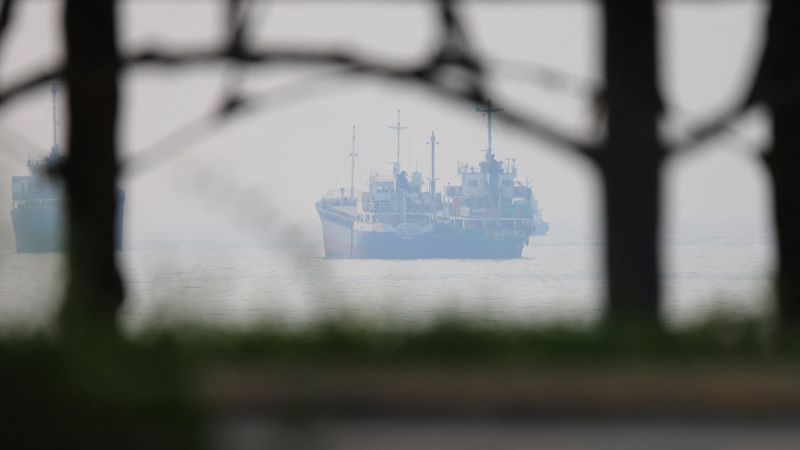
The Iran war exposed a long-simmering feud within the world’s most powerful oil cartel, boiling over this spring when it contended with the biggest oil supply shock in history. Now OPEC, the largest consortium of oil-producing nations, faces a fight for its existence.
The Strait of Hormuz has started to reopen, and some OPEC nations are clamoring to ramp up oil production to make up for lost time and sales. That’s reigniting age-old feuds about production quotas that already led the United Arab Emirates, one of OPEC’s most significant members, to leave the group in April.
OPEC is confronted with a critical choice: keep the group together and send oil prices into the ground, or drive profit higher and risk dismantling the nearly 70-year-old cartel. What’s the gripe about?
While the rest of the world was scrounging around for any oil it could get this spring, the Middle East was awash in the stuff. The only problem: OPEC countries with major operations in the Persian Gulf mostly struggled to get their crude out to their customers.
Iran’s closure and America’s subsequent blockade of the Strait of Hormuz locked in a fifth of the world’s oil supply. Several OPEC members – namely Iran, Iraq and Kuwait – had no choice but to shut in their crude production and wait.
Now that traffic in the strait has started to ramp up again, the jockeying for production quotas has begun. Iraq, the bloc’s second-largest oil producer, is reportedly the next shoe to drop – the country’s oil minister told Bloomberg that Iraq would have to decide whether or not to remain with OPEC if production targets don’t dramatically increase.
Iraq’s production was the hardest hit by the war, dropping by 75% to just over 1 million barrels a day in April and May – down from more than 4.5 million a day in January and February. Iraq wants permission to produce a record 5 million barrels a day coming out of the war, with a long-term aim of getting production up to 7 million barrels a day, Bloomberg reported. “What’s the motivation?
They need the cash!” said Jay Hatfield, CEO and founder of asset manager Infrastructure Capital Advisors. The Saudi conundrum The ultimate decider will be Saudi Arabia, by far the largest OPEC member with the most control over the group.
Unlike Iraq and Kuwait, the Saudis don’t need production to ramp up too much. The country was able to keep its oil business mostly afloat by bypassing the strait with pipelines that shipped oil to a port in Yanbu on the other side of the nation.
That allowed the Saudis to get its oil out via the Red Sea – not an option for Iraq and Kuwait, whose only seaports lie in the Persian Gulf. While Iraq’s and Kuwait’s production plummeted during the war, Saudi Arabia’s fell by less than 40%.
So Saudi Arabia lacks the same incentive to start pumping oil like crazy. Quite the opposite: If production ramps up significantly before global demand recovers, that could destroy oil profit at a time when the Middle East is reeling from a lack of business. “In this situation, it seems counterproductive to flood the market and push prices lower,” said Dan Pickering, founder and chief investment officer at Pickering Energy Partners.
That’s why OPEC has been clear: it will be judicious with its supply increases while it engages in dialog with its member states. This weekend, OPEC+, a group that includes Russia and some other non-OPEC members, agreed to raise daily output by just 188,000 barrels, the fifth such incremental production increase since March.
The price equation If OPEC turns the spigots to max, a complex operation with no guarantee of success, all that oil may have nowhere to go. Demand tumbled during the war as prices surged and fuel was in short supply.
Demand hasn’t recovered yet, and it may never return to where it was before the war – particularly in China and Europe, which went on an electrification spree over the spring. “The market is facing the risk of a temporary glut as trapped oil finally re-enters a system that has already spent months learning how to function without it,” noted Natasha Kaneva, head of global commodities strategy at JPMorgan. In theory, there should be buyers: Global emergency and commercial petroleum stockpiles plunged – particularly in the United States and China – as the world’s oil supply fell by an astonishing 1.4 billion barrels since the war started in March.
Those reserves will need to be refilled. But that’s probably more a 2027 story than a 2026 one, as both governments look to see the path oil prices take, noted Kaneva.
If OPEC production surges, it would be competing with around 90 million other barrels of oil that are starting to escape the strait, according to Kpler. And if no one is eager to buy any of it, oil prices could plunge.
Next year, $60 oil is in play, said Kieran Tompkins, senior climate and commodities economist at Capital Economics. In 2028, oil could sink to $50 a barrel.
That’d be good news for consumers, but bad news for some of the cartel’s largest producers. Who wins?
OPEC is fraying at the edges and it has tremendous incentive to keep the gang together. Working together can help it navigate a rapidly changing market in an increasingly hostile region of the world – and compete with the United States, which has become a potent competitor.
But the cartel has beaten back opposition before. “Iraq has outlined targets to raise production capacity multiple times before, without much success,” noted Tompkins. “But it nonetheless adds to the sense that cohesion and constraint within OPEC is breaking down.” The extraordinary strait lockdown could make this time different. It could force Saudi Arabia’s hand.
If that happens, the Saudis still have a way to have their cake and eat it, too: Saudi Arabia could agree to raise production caps so high and produce so much oil that it forces oil prices into the $40 range – territory that only the wealthy Saudis could endure. “[Saudi Crown Prince] Mohammed bin Salman could say: ‘If you push me too far, maybe we’ll grow production, too,’” said Vikas Dwivedi, global oil and gas strategist at Macquarie Group. “’We’ll see everybody at the bottom and see how everybody’s feeling.’” Dwivedi doesn’t consider that the most likely scenario, but it’s not outside the realm of possibility, either. “It would be bitterly ironic if we went from the biggest supply shock ever to a historic supply glut,” he said.
Información de CNN (Top Stories). Edición y redacción: Noticias Today.
Ver publicación original ↗

💬 Comentarios (0)
Iniciá sesión o creá tu cuenta para comentar.